Welcome to our Accelerate Future HEI audio library. Hear directly from the project partners about their experiences and reflections. Start watching now to expand your knowledge and become inspired to join our mission to support transformation in higher education.

At UCLL University of Applied Sciences in Belgium, innovation in higher education is creating meaningful opportunities for students to learn by doing.
As part of the Accelerate Future Higher Education initiative, one of their pilot actions explores how internal UCLL departments can act as clients for student projects. The aim is simple: connect student learning directly to authentic assignments that create value inside our own organisation.
The result is that students gain valuable hands-on experience, while their work contributes directly to strengthening UCLL’s communication, visibility, and innovation efforts. At the same time, these collaborations help students discover an important side of university life that often remains invisible: research and applied innovation beyond the classroom.
Recently, a team of five third-year Business Management students partnered with CIMIO, UCLL’s Centre for Impact-Oriented Social Innovation and Entrepreneurship.
Instead of choosing an external client, the team deliberately opted to work within their own institution. Their motivation was both practical and inspiring: the familiar environment made collaboration easy, while also offering a unique chance to discover what happens behind the scenes at UCLL.
Listen to our podcast hosted by Katrien Vandael, Researcher in Sustainable Entrepreneurship and Innovation, as she speaks to three of the team about:
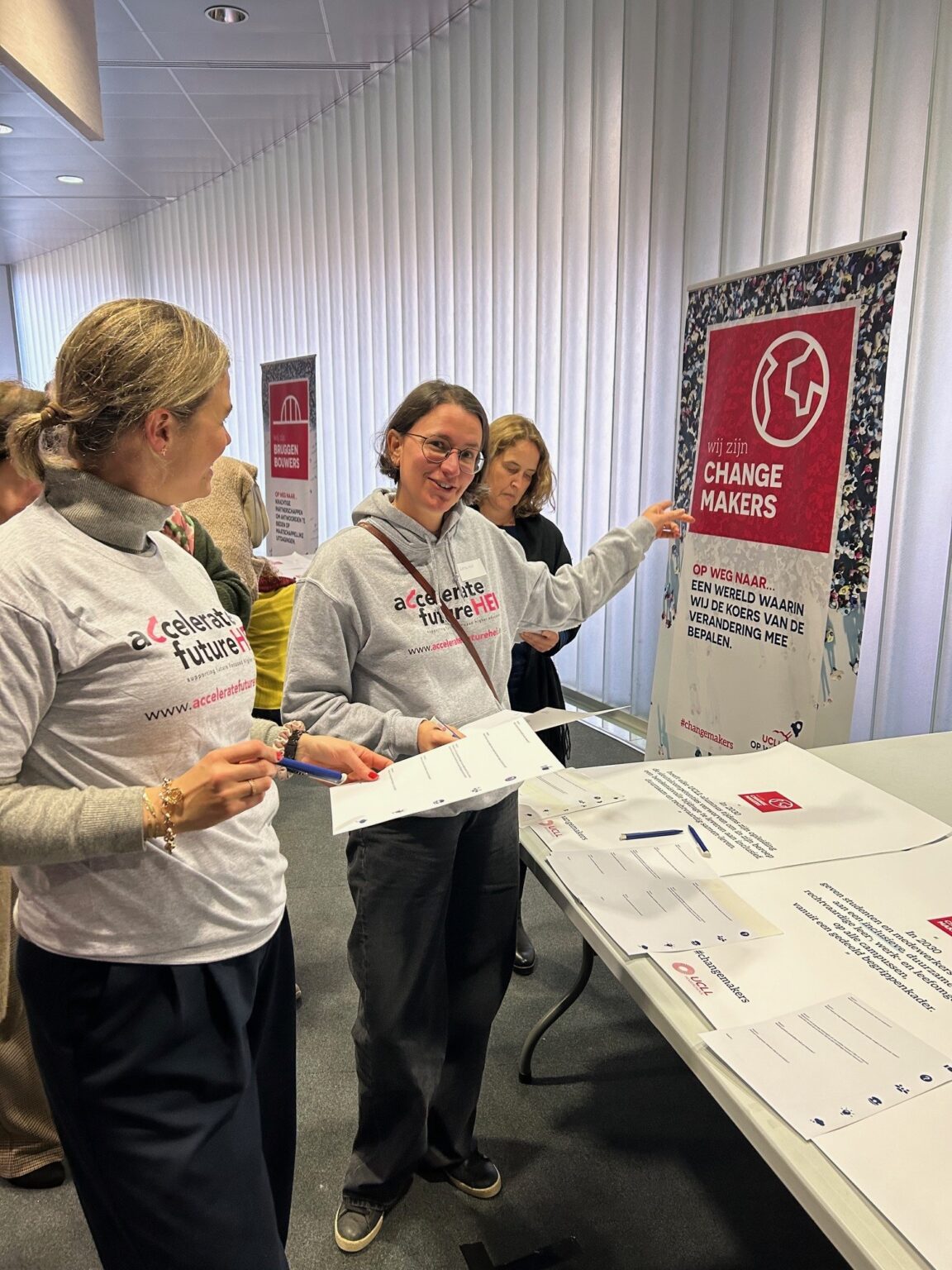
As part of our Capacity Building and Knowledge Exchange activities, the nine participating Higher Educational Institutions (HEIs) are supported with knowledge exchange and learning opportunities by way of dedicated events and workshops. This includes Cohort Knowledge Exchange Events, Accelerate Training Workshops and tailored opportunities to share experience and good practice. In addition, each institution benefits from individual coaching and mentoring, providing expert feedback and guidance throughout the transformation process.
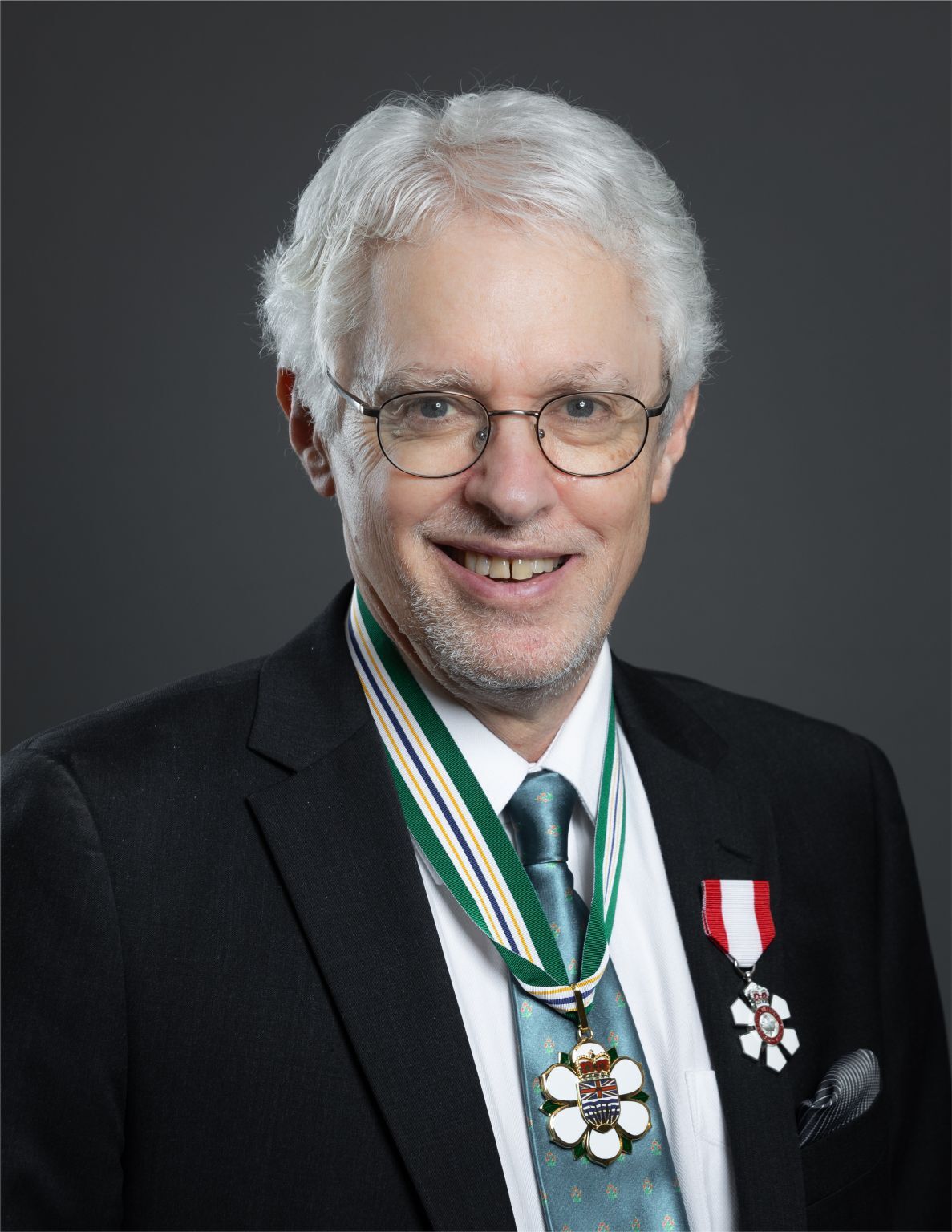
At the University of Applied Sciences St. Pölten (USTP) this mentoring is provided by Andrew Petter, President Emeritus, Professor Emeritus, Simon Fraser University & Associate Counsel, Arvay Finlay LLP. During a recent visit to USTP, Andrew Petter took part in an interview titled:
“Drivers for Social Innovation and Social Entrepreneurship – How universities can contribute to regional impact? “
From 2010 to 2020, Andrew Petter served as President of Simon Fraser University (SFU), where he played a pivotal role in shaping SFU into Canada’s leading “engaged university.” Under his leadership, SFU gained international recognition for its innovative education models, cutting-edge research, and deep, sustained community engagement. Previously, Andrew served as an elected member of the British Columbia legislature, holding key cabinet portfolios including Advanced Education. Honoured with the Order of Canada and the Order of British Columbia, he is a champion of higher education and public policy.
One of the central messages from the interview is that universities achieve lasting regional impact when engagement is embedded into their institutional identity. This requires alignment across leadership, organisational culture, structures, and incentives, all oriented towards genuine partnership with society. When done well, community engagement strengthens regions and communities and also enriches education, research, and the university itself.
Listen to the interview to explore more insights and practical perspectives from Andrew Petter on how universities can drive social innovation and regional transformation.
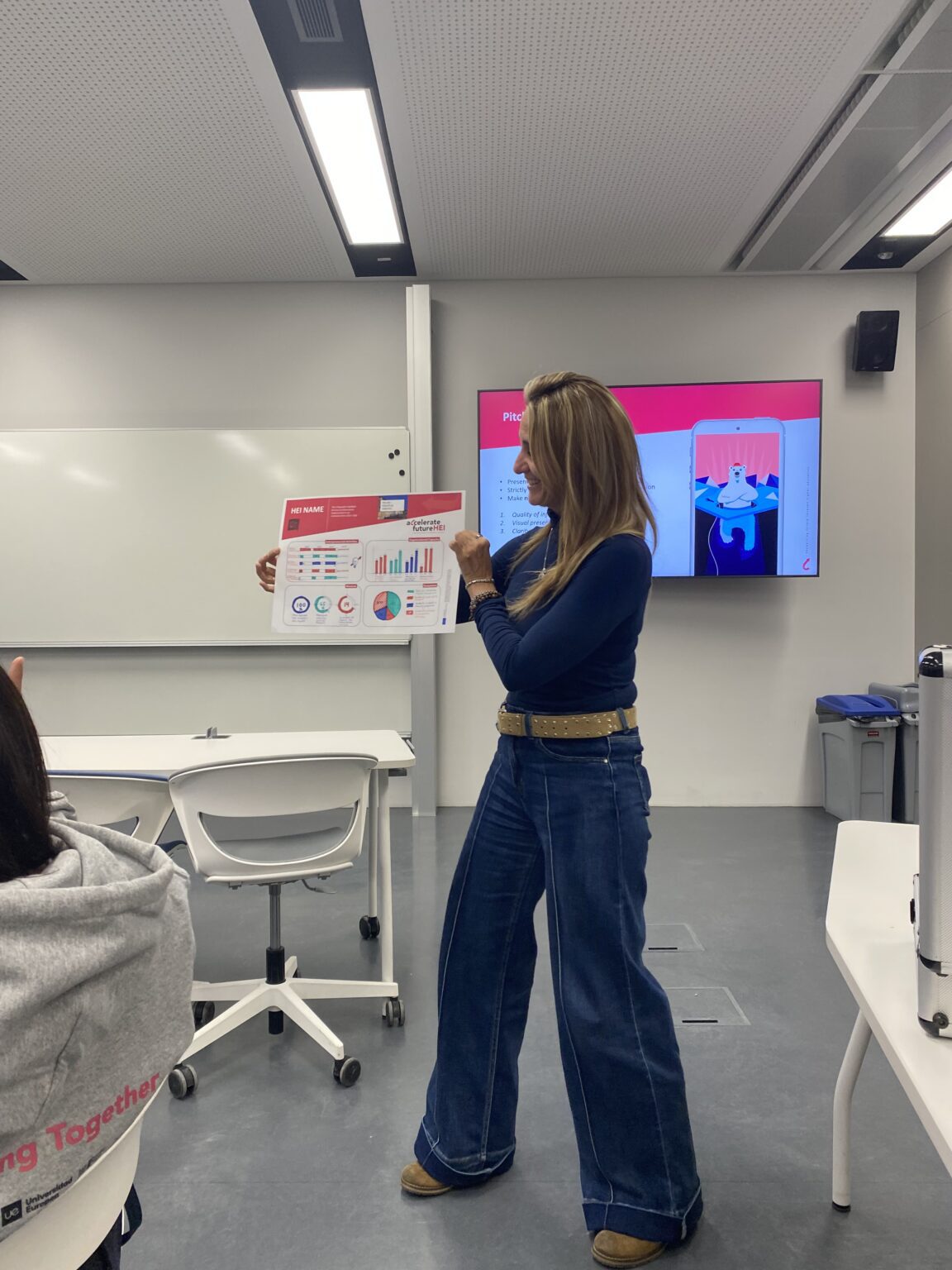
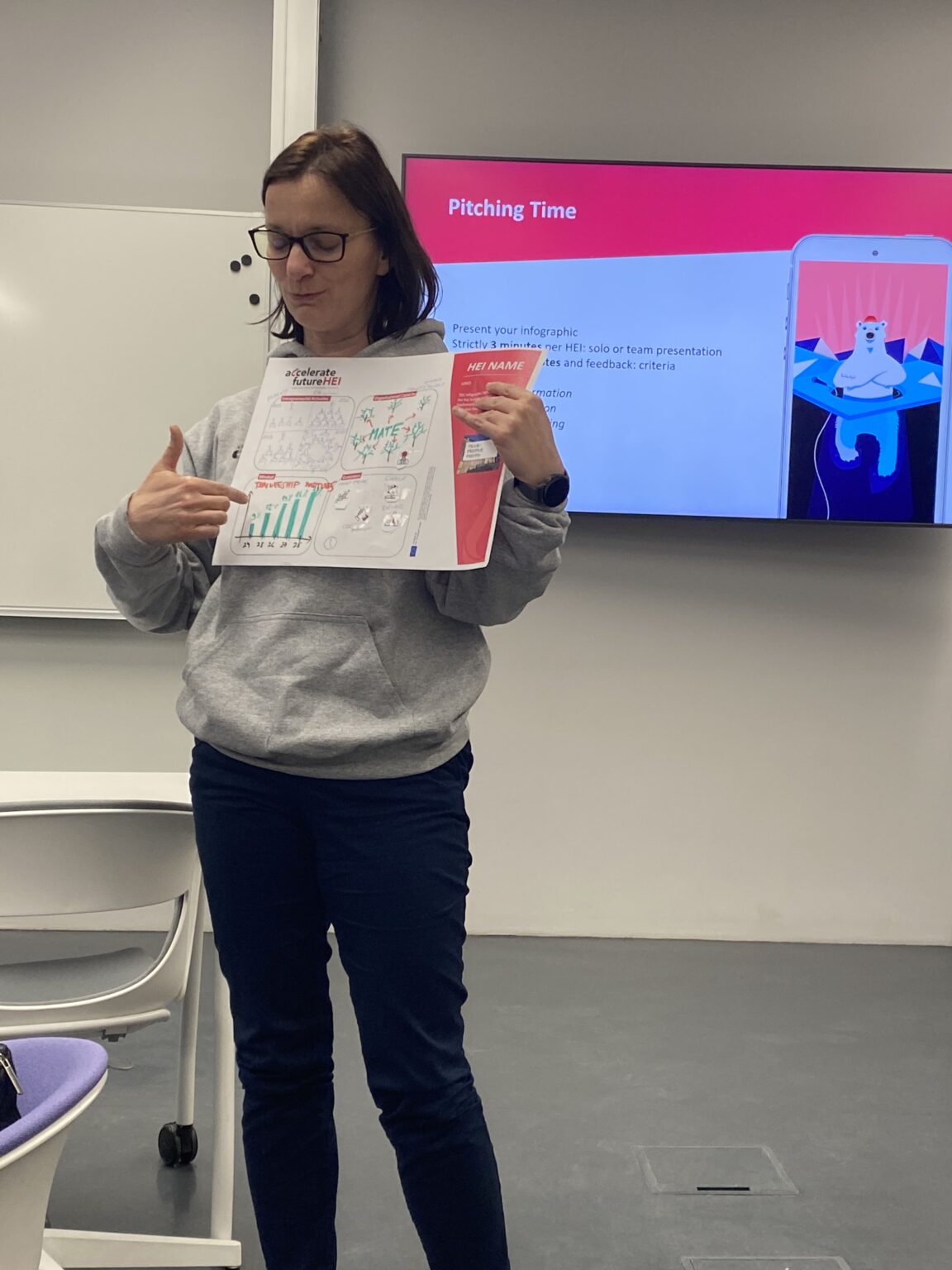
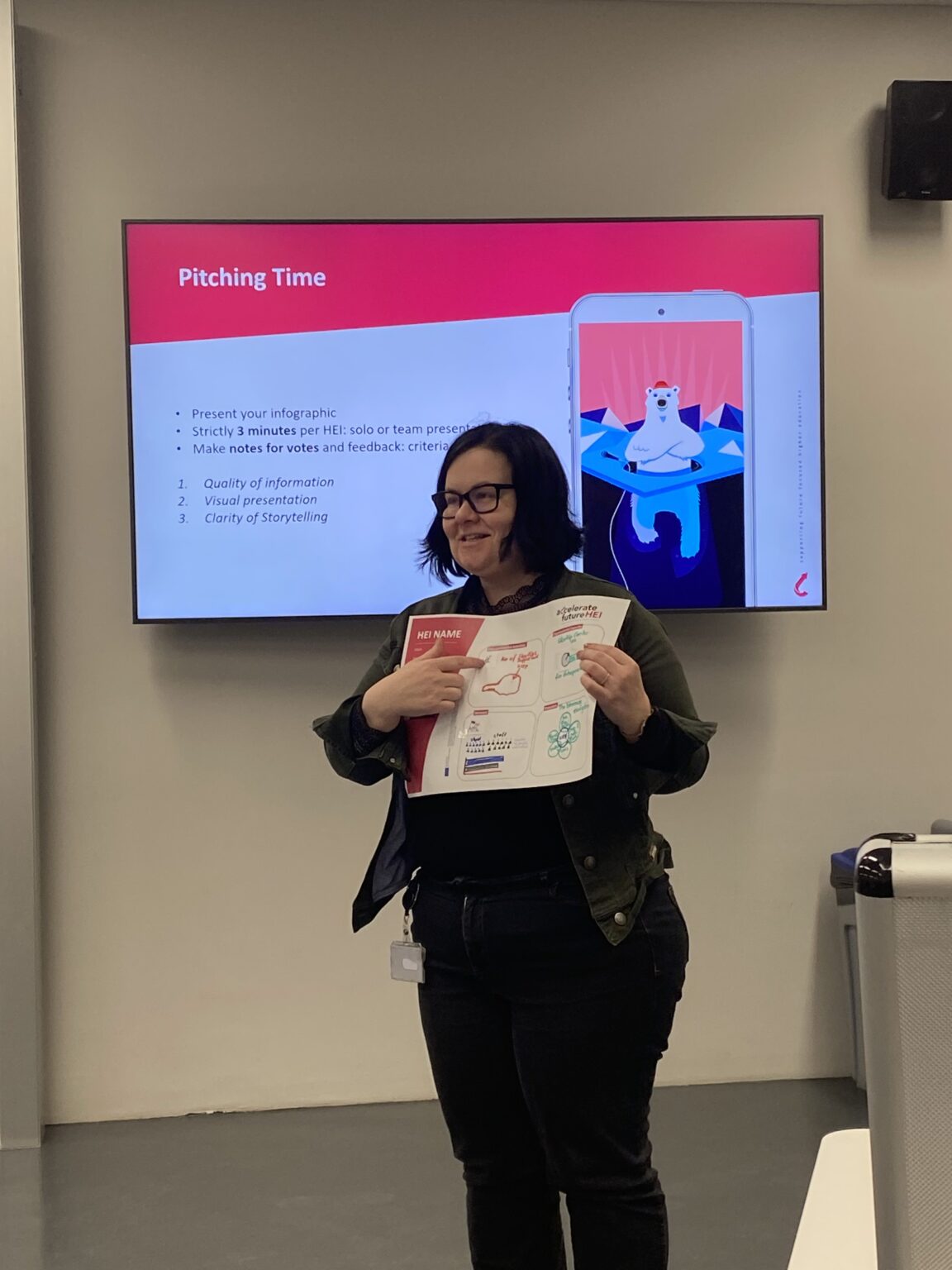
During this creative session, partners reimagined how they communicate their Institutional Transformation Acceleration Projects. Their learning, experimentation, and changes were distilled into clear visual narratives. Through an “infographic-style” pitching exercise, teams translated complex transformation journeys into concise, engaging, and accessible stories. The workshop highlighted how powerful visual communication can make institutional change easier to understand, share, and inspire. An approach you’ll now hear reflected in the perspectives of partners,Universidad Europea de Canarias (UEC),University of Applied Sciences St. Pölten (USTP) and Magyar Agrár- és Élettudományi Egyetem (MATE).