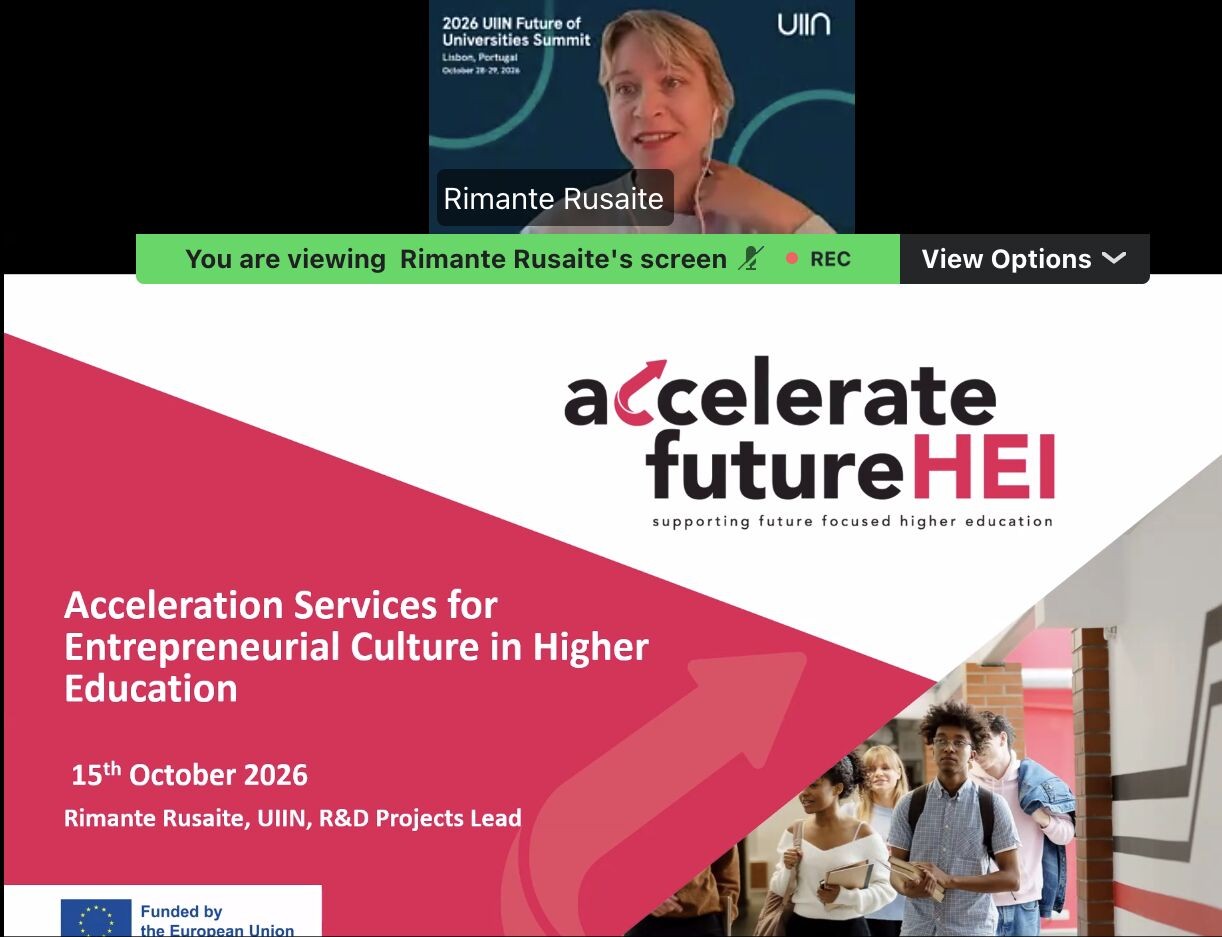
By Rimante Rusaite, R&D Projects Lead, UIIN
A university can adopt a new strategy while daily life continues much as before. Academics return to familiar responsibilities. Departments pursue separate priorities. A commitment to entrepreneurship may appear in institutional plans long before staff have the time or confidence to put it into practice. What helps that ambition enter the everyday life of an institution?
At BEAGLE’s “Uncharted Waters: From Research to Impact” webinar on 15 October 2026, I shared what we have been learning through Accelerate Future HEI about this question. The discussion brought our experience of institutional transformation into conversation with BEAGLE’s approach to research–industry collaboration and KALEIDOS’s work on ecosystem engagement.
Across our nine university partners, transformation has taken different forms. Each institution began by examining its current position and bringing stakeholders together around a shared vision. Those conversations informed roadmaps, followed by implementation with support from mentoring, training and peer learning.
The word acceleration can suggest speed. In practice, much of this work requires patient attention: understanding why colleagues hesitate, finding common ground between departments and making room for unfamiliar approaches. Our training programme evolved as partners identified new needs. The support had to remain responsive to the people using it.
The examples I shared illustrated this diversity. At UCLL in Belgium, curriculum development involved regional companies and consultation with students, creating opportunities for practical collaboration, including internships. At Instituto Superior Técnico in Portugal, a thematic entrepreneurship hub offered a focused starting point within a much larger institution. Universidad Europea de Canarias strengthened collaboration across faculties and schools, creating opportunities for colleagues to work together in ways they had not previously explored.
These developments offer early indications of changing institutional practices. Whether they endure depends partly on what surrounds them. Visible leadership commitment helps connect an initiative to institutional priorities. Staff need time for the work and recognition of their contribution. Without those conditions, even a promising activity can remain dependent on a few committed individuals.
The panel discussion raised a related question: what happens to the knowledge and tools produced through European projects?
My concern is that resources can become outdated when responsibility for maintaining them remains unclear or unfunded. Making a toolkit available is one step; keeping it useful requires continued attention and opportunities to apply it.
Closer collaboration between sister projects offers a possibility here. When we exchange approaches while our work is still developing, we can learn earlier, identify overlaps and allow more people to benefit from the process. Yet this cooperation takes time. Bringing teams together and developing shared conclusions involves work that needs explicit resources.
As Accelerate Future HEI approaches its conclusion, these questions become increasingly concrete. Our final partner reflections and follow-up interviews will help us understand what universities have embedded and where support is still needed.
A roadmap’s lasting value emerges through the decisions it informs and the relationships it strengthens. Following those changes into everyday university life will tell us more about transformation than the completion of the roadmap itself.